

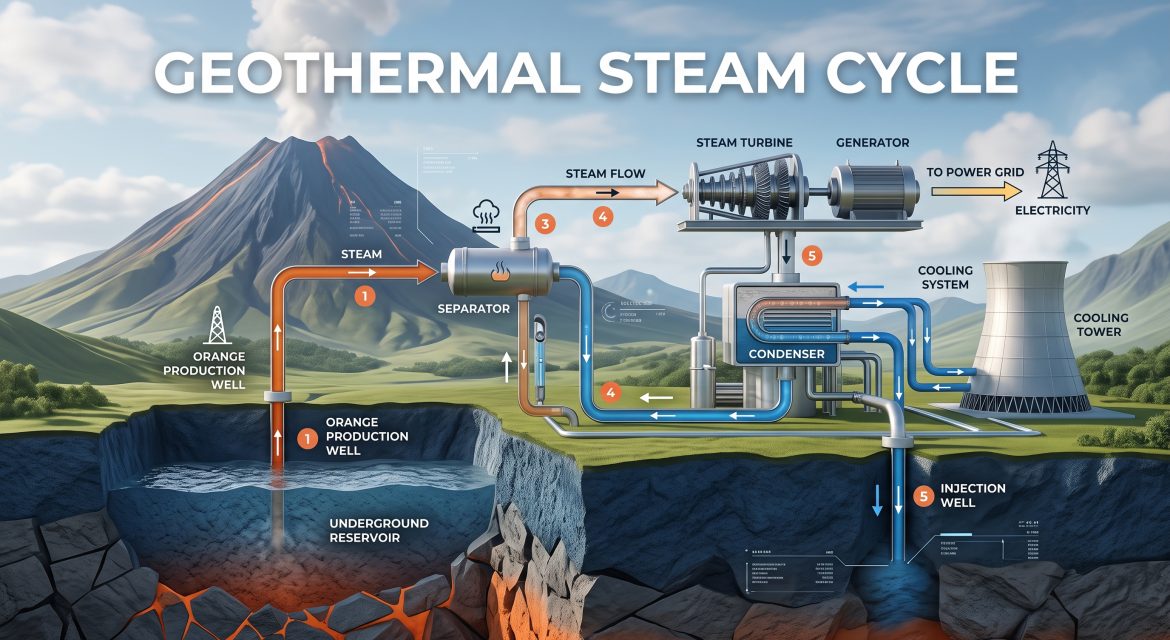
A simple explanation of the journey of geothermal fluid in a closed-loop power plant
1. Introduction
Unlike fossil fuel power plants that constantly burn fuel, geothermal power plants rely on a repeating fluid cycle. Hot geothermal fluid is brought up from deep underground, used to help generate electricity, cooled, and then sent back into the reservoir. This geothermal steam cycle is the core of a geothermal power plant because it turns underground heat into clean, continuous power while helping protect the resource for future use.
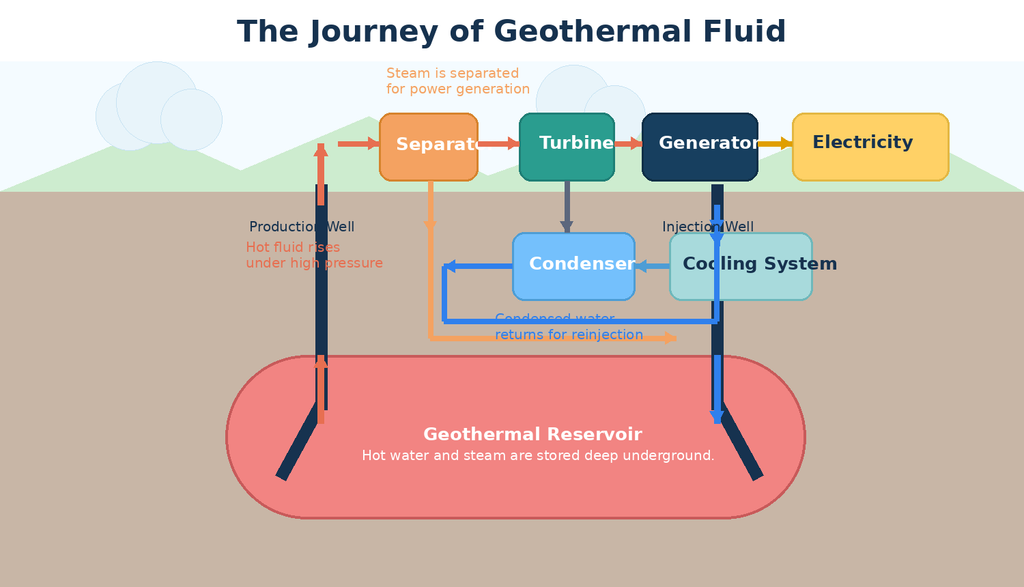
Figure 1. The journey of geothermal fluid from reservoir to reinjection.
2. Step 1 – Extracting Geothermal Fluids
Extracting Heat from the Earth’s Interior
Deep below the ground, a geothermal reservoir stores hot water and steam under high temperature and pressure. A production well is drilled into this reservoir so the fluid can rise to the surface. At this stage, the fluid carries the thermal energy that will later be used in the power plant.
3. Step 2 – Steam Separation
Separating Steam for Power Generation
When the geothermal fluid reaches the surface, it may contain both steam and hot water. In a flash steam power plant, a separator divides these two phases. The steam is directed toward the turbine, while the remaining hot water can be reused in the system or returned underground through reinjection.
4. Step 3 – Power Generation
Converting Steam into Electricity
The separated steam flows into a turbine and makes its blades spin. The turbine is connected to a generator, which converts this mechanical motion into electricity. In simple terms, steam provides the driving force, the turbine turns, and the generator produces electrical power for homes and industries.
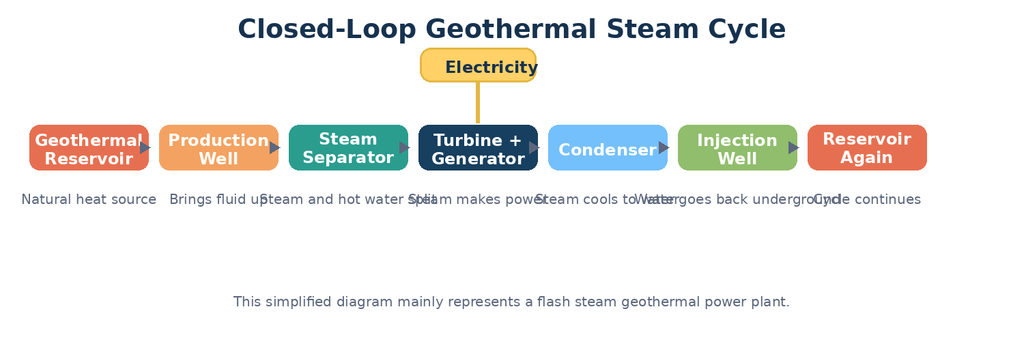
Figure 2. Simplified closed-loop flow of a geothermal steam cycle.
5. Step 4 – Steam Condensation
Cooling the Steam
After leaving the turbine, the steam has already given up much of its energy. It enters a condenser, where a cooling system helps turn it back into water. This step is important because it allows the fluid to continue its journey through the cycle instead of being wasted.
6. Step 5 – Reinjection
Returning Water to the Reservoir
The cooled water is sent down an injection well and returned to the geothermal reservoir. Reinjection helps maintain reservoir pressure, supports long-term resource sustainability, and reduces environmental impact at the surface. This is why geothermal power plants are often described as working in a closed-loop cycle.
7. Why the Steam Cycle Matters
The geothermal steam cycle matters because it makes geothermal power both practical and sustainable. It allows:
• continuous renewable energy generation
• efficient use of geothermal resources
• low greenhouse gas emissions
• stable baseload electricity
• long-term reservoir sustainability
8. Conclusion
In summary, the geothermal steam cycle follows a clear path: extract, separate, generate, condense, and reinject. The geothermal steam cycle is a closed-loop process that enables geothermal power plants to generate clean, reliable electricity while preserving the underground resource for future use.