


| A short circuit occurs when electric current flows through an unintended path with very low resistance. This condition causes the current to rise very quickly. As a result, wires, components, or electrical equipment can heat up, become damaged, burn, or create danger for people. |
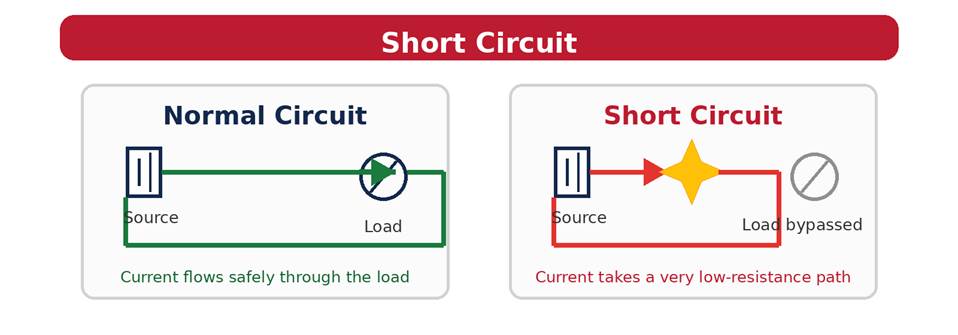
Simple illustration: difference in current flow between a normal circuit and a short circuit.
1. How a Short Circuit Works
Under normal conditions, electric current flows from the power source to a load, such as a lamp, motor, or electronic device. The load limits the current so it remains safe. In a short circuit, the current passes through another path with very low resistance. Because the resistance is small, the current becomes too large in a short time.
2. Causes, Effects, and Prevention
| Common Cause | Possible Effect | Prevention Method |
| Damaged wire insulation or exposed cable. | The cable heats up quickly and may melt. | Replace damaged cables and use proper insulation. |
| Loose or incorrect electrical connection. | The MCB/fuse may trip or blow because of excess current. | Make sure the installation is done by a qualified technician. |
| Water enters the panel, outlet, or equipment. | Sparks, a burning smell, or fire risk may occur. | Keep electricity away from water and use suitable protection. |
3. Protection Devices Used
Short circuits are usually prevented and limited by protection devices such as fuses, MCBs, MCCBs, or protection relays. These devices work by disconnecting the electrical flow when the current exceeds the safe limit. If an MCB trips often or a fuse blows repeatedly, do not just replace it. Find the cause of the fault first, because damaged cables, overloads, or faulty components may be present.
| Conclusion: A short circuit is an electrical fault that looks simple, but its impact can be serious. Cable inspection, proper installation, and the use of electrical protection are very important to keep the system safe. |