

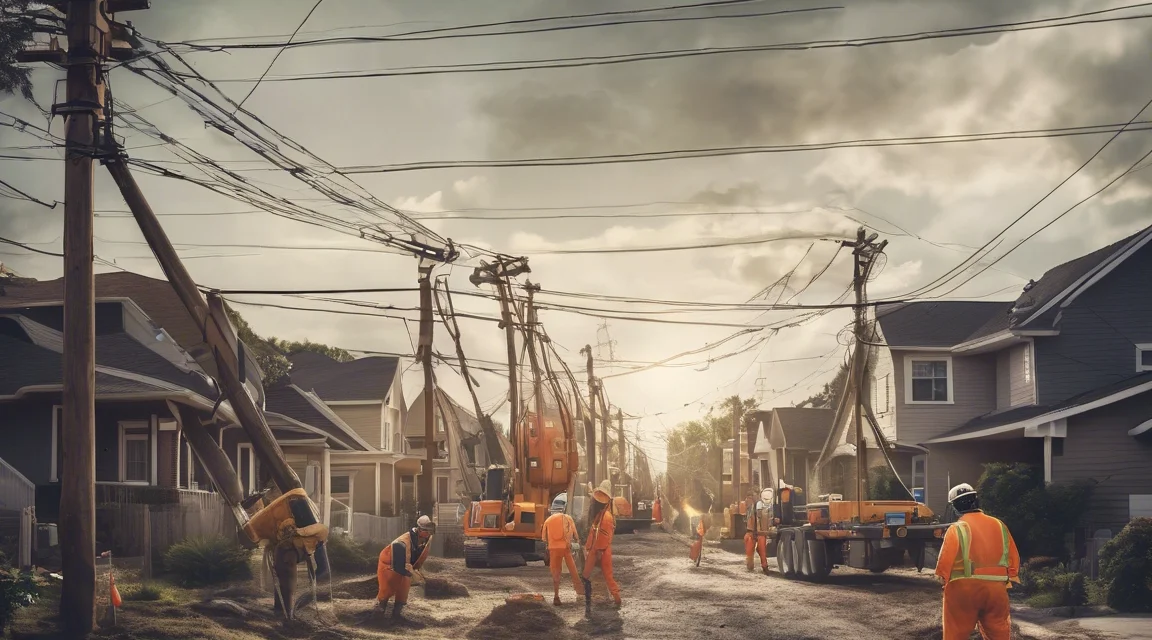
Rising concerns about power reliability, safety, and extreme weather events, more cities and utilities around the world are investing in underground power distribution systems. What was once considered too costly and complex is now seen as a critical solution to improve electrical resilience—especially in disaster-prone and densely populated areas.
But is the shift below ground truly worth the investment?

Climate Change & Grid Vulnerability
Increasingly severe weather events—hurricanes, snowstorms, wildfires—have placed overhead power lines under scrutiny. In 2023 alone, outages caused by wind and falling trees affected millions of homes globally. Underground systems, shielded from environmental exposure, offer a more reliable alternative in such scenarios.
In the United States, states like California and Florida have already announced multi-billion-dollar plans to bury thousands of miles of overhead lines to reduce wildfire risk and storm-related outages.
Urban Planning and Aesthetics
Aside from climate concerns, urban development trends are pushing toward underground infrastructure. City planners cite reduced visual clutter, safer public spaces, and increased property values as strong reasons to shift underground—especially in business districts, tourist areas, and smart cities.
“The visual difference is dramatic,” says Emily Hart, a city infrastructure consultant in Toronto. “We’re future-proofing the city while preserving its beauty.”
The Cost Challenge
Despite the appeal, cost remains a major barrier. Underground distribution systems can be five to ten times more expensive to install than overhead lines. Trenching, conduit installation, insulation, and careful planning all contribute to higher up-front investments.
However, some argue that lifetime cost savings and reduced outage-related expenses balance the equation. A study by the European Network of Transmission System Operators found that while underground lines cost more initially, they last longer and require less maintenance, especially in urban zones.
Reliability vs. Repair Time
Underground systems are less likely to experience faults, but when they do, locating and repairing those faults can be slower and more complicated.
“An overhead line fault can often be repaired within hours,” notes utility manager James Lopez from San Diego. “With underground, it may take a day or more due to excavation and detection.”
Who’s Leading the Shift?
Several countries are at the forefront:
- Singapore: Nearly all power lines are underground.
- Germany: Integrating underground lines as part of its Energiewende (energy transition).
- Japan: Tokyo is undergoing a major undergrounding project for earthquake resilience.
- Indonesia: Jakarta’s government is gradually burying cables in the capital’s central districts.
While undergrounding power lines is no silver bullet, it is becoming a strategic component of grid modernization. The decision often comes down to risk tolerance, budget availability, and regional priorities.
For cities and nations willing to make the investment, underground systems may offer more than just protection—they represent a step toward a smarter, safer, and more resilient energy future.