


A concise technical article on function, operating capability, and safety aspects in power systems.
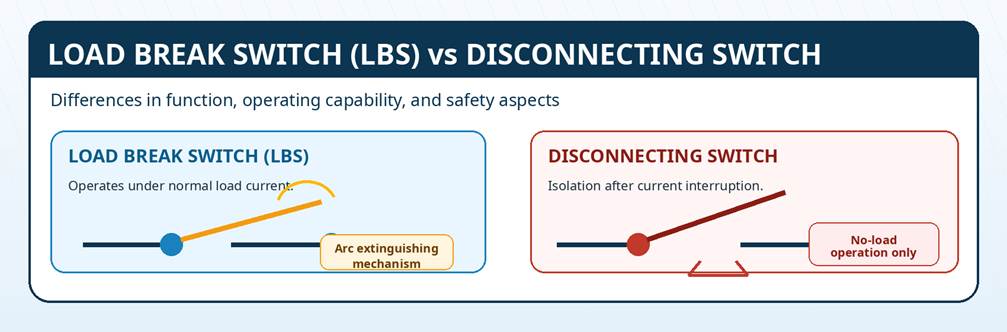
Figure 1. Functional comparison between LBS and disconnecting switch.
1. Introduction
In electrical power systems, switching and isolating devices are used to control power flow, protect operators, and support maintenance work. Two devices that are often confused are the Load Break Switch (LBS) and the disconnecting switch. Both can open a circuit, but their operating capabilities and safety purposes are different.
2. Load Break Switch (LBS)
A Load Break Switch is designed to open and close a circuit while normal load current is flowing. For this reason, an LBS is equipped with an arc-extinguishing mechanism, such as an arc chute, compressed air, SF6, or vacuum technology. It is commonly used in distribution networks, ring main units, substations, and feeders to perform safe load switching.
3. Disconnecting Switch
A disconnecting switch, also called an isolator, is mainly used to provide a visible isolation point after the current has already been interrupted by another device, such as a circuit breaker or an LBS. It is not intended to interrupt load current because it normally does not have sufficient arc-extinguishing capability. Opening it under load can create a dangerous arc and damage equipment.
4. Main Differences
| Aspect | Load Break Switch (LBS) | Disconnecting Switch |
| Main function | Opens and closes circuits under normal load conditions. | Provides isolation for maintenance work. |
| Operation under load | Allowed, as long as the current is within the equipment rating. | Not allowed; it is normally a no-load operating device. |
| Arc control | Has an arc-extinguishing mechanism. | Usually has no adequate arc-extinguishing system. |
| Fault current | Not normally used to interrupt short-circuit current unless combined with fuse or protection. | Cannot interrupt fault current. |
| Common use | Feeder switching, distribution transformers, RMU, and network sectionalizing. | Isolation after current is interrupted by a CB or LBS. |
5. Selection and Operation
If the circuit is still supplying load, an appropriately rated LBS or circuit breaker should be used. The disconnecting switch should be operated only after the load current has been removed, so it can provide a clear physical separation. In field operation, the correct sequence is essential: interrupt the current first, verify a safe condition, then open the isolator for maintenance isolation.

Figure 2. Safe operating sequence between interrupting and isolating devices.
6. Conclusion
The most fundamental difference between an LBS and a disconnecting switch is the ability to interrupt load current. An LBS can be operated under normal load conditions because it has an arc-extinguishing mechanism, while a disconnecting switch is only an isolation device for no-load conditions. Understanding this distinction helps prevent misoperation, equipment failure, and electrical safety incidents.