


In electrical and electronic installations, the quality of a connection can determine the safety, performance, and longevity of the system. Three common methods of creating wire connections are soldering, crimping, and swaging. Though all serve the same purpose—securing electrical contacts—their techniques, tools, and applications differ significantly.
Let’s explore what sets these methods apart and when each is best used.
1. What is Soldering?
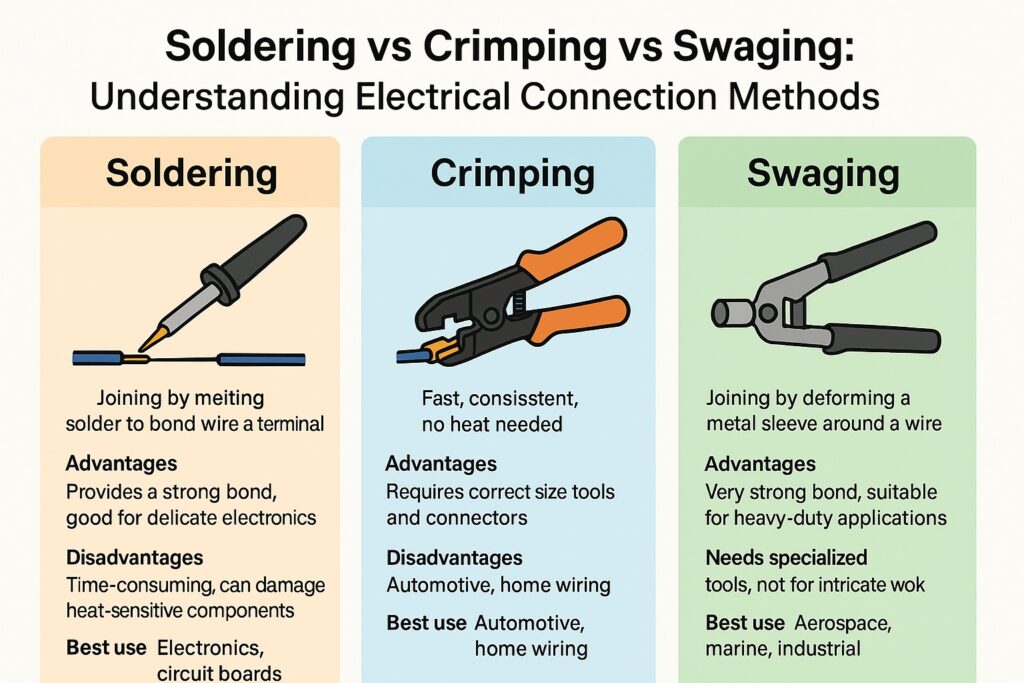
Soldering is the process of joining two or more metal components by melting a filler metal (solder) into the joint. The solder typically contains a mix of tin and lead or other alloys for lead-free options.
Advantages:
- Provides a strong, permanent bond.
- Ideal for delicate electronics and circuit boards.
- Visually inspectable joints.
Disadvantages:
- Time-consuming and requires skill.
- Can be brittle under mechanical stress.
- Heat-sensitive components can be damaged.
Best Used For: Circuit boards, small electronic components, and precision work.
2. What is Crimping?
Crimping is a mechanical method of joining a wire to a connector by compressing them together using a crimping tool. No heat or solder is used.
Advantages:
- Fast and consistent.
- Strong mechanical bond if done correctly.
- Ideal for high-volume production.
Disadvantages:
- Requires the correct size tools and connectors.
- A poor crimp can cause high resistance or failure.
Best Used For: Automotive wiring, industrial wiring, and when repeatability is important.
3. What is Swaging?
Swaging involves deforming a metal sleeve or ferrule around a wire or terminal by applying high pressure, often using hydraulic or mechanical tools.
Advantages:
- Creates a very strong and permanent mechanical bond.
- Often more robust than crimping for heavy-duty applications.
- No heat required.
Disadvantages:
- Specialized tools and equipment needed.
- Not ideal for small-scale or intricate work.
Best Used For: Aerospace, marine, and high-stress industrial applications.
Comparison Summary
| Method | Strength | Heat Used | Best For | Tools Required |
|---|---|---|---|---|
| Soldering | Medium | Yes | Electronics, circuit boards | Soldering iron, solder |
| Crimping | High | No | Automotive, home wiring | Crimp tool |
| Swaging | Very High | No | Aerospace, marine, industrial | Swage tool |
Conclusion
Choosing between soldering, crimping, and swaging depends on your project’s requirements. Soldering offers precision, crimping provides speed and reliability, and swaging delivers unmatched strength. Understanding their differences ensures you use the right method for a secure, long-lasting connection.